Optimizing High-Intensity Functional Training Performance: Individualized Load Prescription vs. Standardized Weights
10 März 2026
Objectives
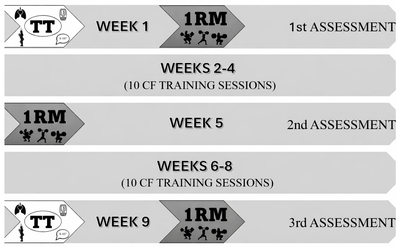
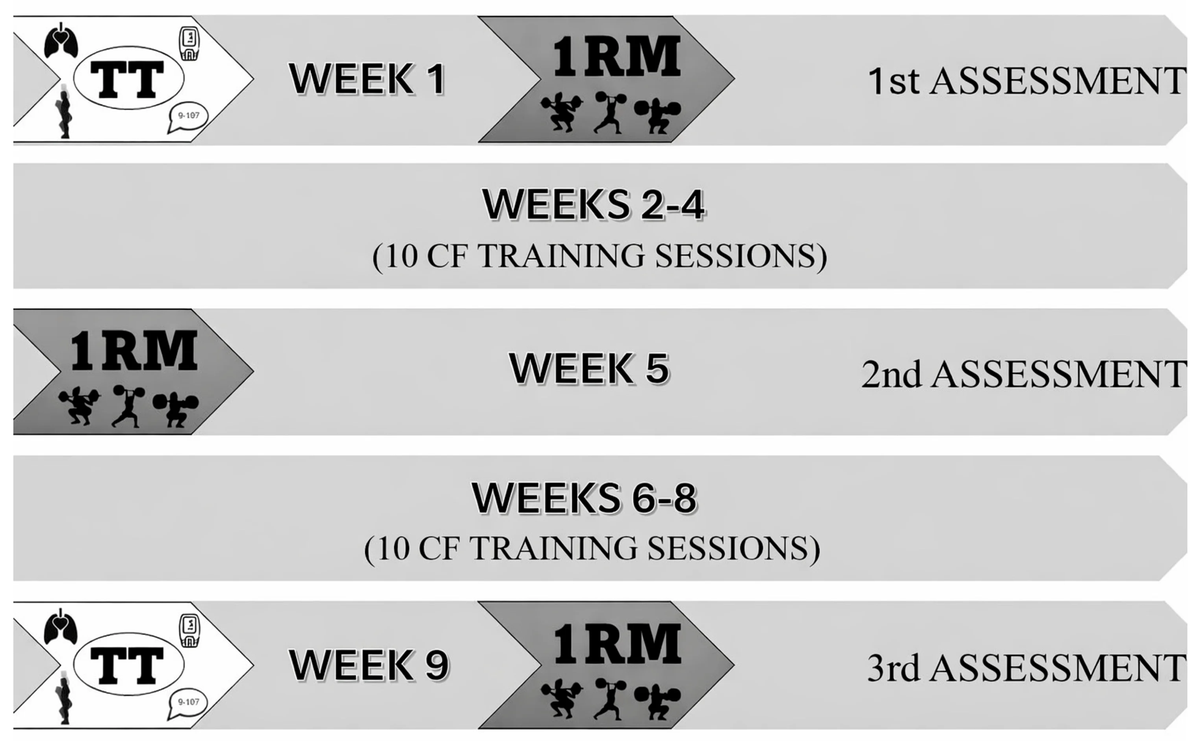
Background: This study compares the effects of relativized barbell loads (% of one-repetition maximum or 1RM) versus standardized prescribed loads on High-Intensity Functional Training (HIFT) performance, strength adaptations, physiological response, and perceived effort. Methods: In total, 22 experienced HIFT athletes (12 males, 10 females) were randomly assigned to either a standardized load (SL) or relativized load (RL) group. Both groups completed an 8-week HIFT program with benchmark workouts. Performance was assessed using a local muscle endurance test, maximal strength through 1RM testing (back squat, clean, and clean and jerk), and neuromuscular performance via countermovement jump (CMJ). Cardiopulmonary response (VO2peak, VO2mean, heart rate, and blood lactate levels) and perceived effort (Borg CR-10) were also evaluated. Results: RL participants did not show a difference in the interaction between group and time in TT performance but differences were founded for strength gains in back squat (p = 0.005, 95% CI [3.1, 8.6]) and clean (p = 0.027, 95% CI [1.2, 5.7]) compared to the SL group. No significant differences were found in clean and jerk performance or CMJ height. Cardiopulmonary responses were similar between groups, indicating comparable physiological stress. RL participants reported significantly lower perceived exertion (p < 0.001, 95% CI [6.3, 9.8]), suggesting more efficient load management and recovery. Conclusions: Use of individualized loads based on 1RM enhanced HIFT performance and strength adaptations, without increasing physiological stress, enabling more efficient training with reduced fatigue.
Autoren
Alejandro Oliver-López, Rafael Sabido, Tom Brandt und Annette Schmidt
DOI
https://doi.org/10.3390/sports14030108