The overload loop: a distinct reoxygenation pattern above the second ventilatory threshold revealed by a new analytical method
10 März 2026
Objectives
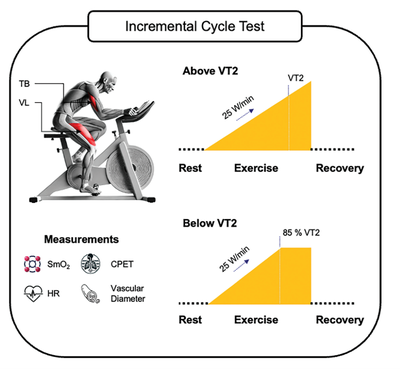
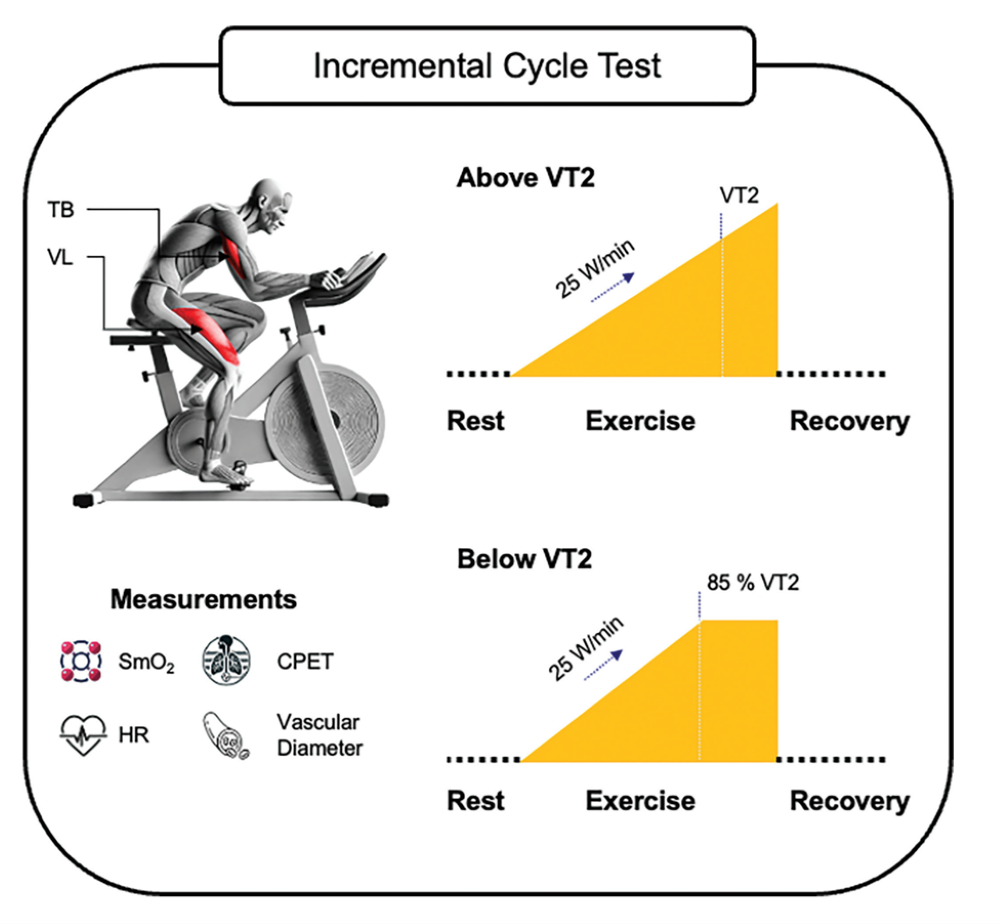
Overpacing is frequently observed in high-intensity functional training modalities such as CrossFit, where athletes exceed sustainable intensity domains early and subsequently fail to recover performance within the same exercise bout. This study examined whether exercising above the second ventilatory threshold (VT2) induces distinct reoxygenation patterns in active and inactive muscles and aimed to develop a mathematical method for quantifying these intensity-dependent effects. Fifty-four healthy men performed two incremental cycling tests, one above and one below VT2, while SmO2 of the vastus lateralis and triceps brachii was continuously measured. Heart rate served as a systemic reference to align local SmO2 values, yielding the new metric , defined as the largest exercise-to-recovery difference at identical relative heart rates. Brachial artery diameter was additionally assessed in a subsample. Only above VT2 did the inactive muscle continue to deoxygenate into early recovery, whereas the active muscle reoxygenated immediately. When plotting both muscles against each other, this produced a distinct circular overload loop, not observed below VT2. confirmed this asymmetry statistically, showing a large effect in the triceps brachii (p < 0.001) and no meaningful difference in the vastus lateralis. Above VT2, brachial artery diameter decreased and subsequently increased during recovery, supporting intensity-dependent vascular regulation. Exceeding VT2 triggers an asynchronous reoxygenation response between muscle groups. The overload loop and its quantification using the newly developed metric provide a novel tool for analyzing intensity-driven SmO2 dynamics and offer new insight into the coordination of local and systemic vascular regulation under conditions of unsustainable exercise intensity.
Autoren
Annette Schmidt, Lucas Koch, Tom Brandt, Timo Schinköthe
DOI
https://doi.org/10.5114/biolsport.2026.159557