Europe’s AI Moment: Physical Intelligence, Industrial Transformation, and the Rise of Conversational Systems
20 March 2026
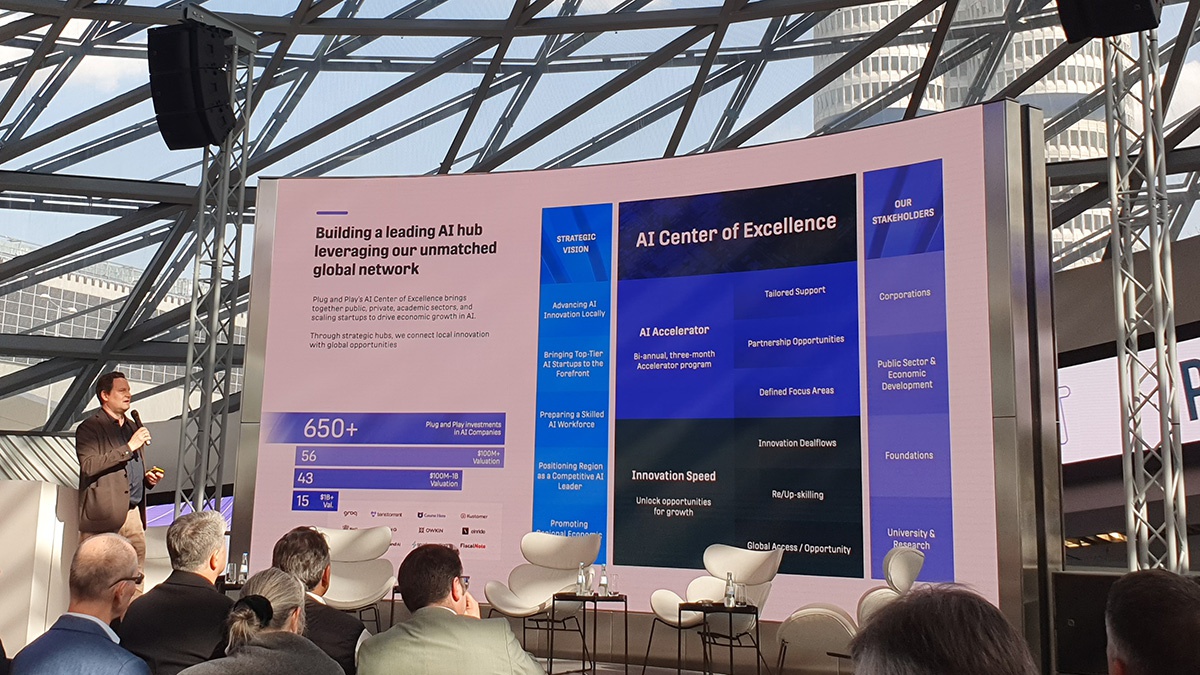
At the Plug and Play Germany Summit 2026 on March 10th, industry leaders, startups, and investors gathered to discuss how artificial intelligence is reshaping industries and everyday life. The conversations focused on three emerging domains: physical AI, industrial AI, and conversational AI – each representing a different layer of how intelligence moves from algorithms into the real world. Across keynote discussions and expert panels, one message was clear: while the United States currently leads in AI development overall, Europe still has a significant opportunity to lead where AI meets the physical world.
Physical AI – Europe’s Opportunity
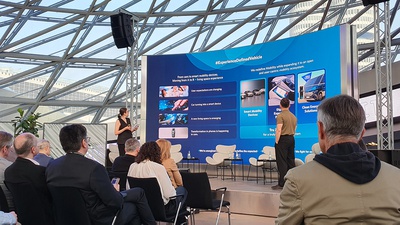 AI embedded in robots, machines, and devices interacting directly with the real world was highlighted as one of the most promising frontiers. While large-scale AI platforms and foundation models are largely dominated by American technology companies, speakers argued that the race for physical AI is still open. Europe’s strong industrial base, engineering expertise, and robotics ecosystem position it well to compete. However, success in physical AI depends heavily on user experience. The goal, panelists emphasized, is not to replace humans but to support them. Physical AI systems should make daily life simpler, reduce repetitive tasks, give people time to focus on meaningful work, and ultimately improve quality of life. Automation should therefore not be viewed merely as a means to greater efficiency.
Industrial AI – From Monitoring to Predictive Intelligence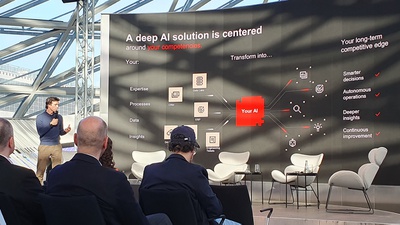
In manufacturing and industrial environments, AI is already delivering measurable impact. Industrial AI applications are rapidly advancing in areas such as process monitoring, task verification, safety & security systems, and predictive maintenance. AI enables companies to move from reactive operations to predictable and schedulable processes. By analyzing sensor data, machine motion, and operational patterns, AI can forecast problems before they occur and coordinate responses in advance. A key technical challenge remains the creation of a semantic world model – a system capable of interpreting physical inputs from sensors and translating them into meaningful operational insights. At present, many industrial AI systems remain application-driven, designed for specific use cases. However, the next step is the growing role of AI agents: autonomous systems capable of interacting with each other and coordinating tasks. Interoperability among these agents, particularly when deployed at the edge (directly on machines or local infrastructure), will be critical. Edge AI offers several advantages like reducing latency, increasing operational reliability, and gathering greater control over sensitive industrial data. Speakers also stressed that AI solutions are rarely plug-and-play. Deep AI implementations often require integration across multiple services, devices, and software layers. Above all, data ownership and control remain essential. Companies that maintain sovereignty over their operational data will be best positioned to build reliable AI systems.
Conversational AI – Powerful, but Imperfect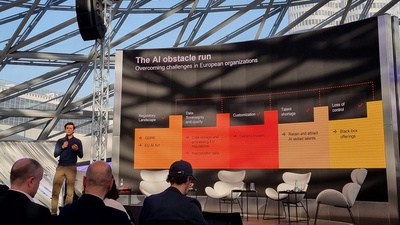
Conversational AI is becoming deeply integrated into everyday life – from customer service chatbots to voice assistants and enterprise support systems. However, speakers urged caution to AI-generated answers that are not always correct. Several challenges were identified such as language ambiguity, dialects & accents, environmental noise, and training limitations as AI responses are only as accurate as the data used to train them. Thus, customer support provides a clear example and can significantly speed up case handling, but it often requires extensive upfront information from the user. Even then, misunderstandings can occur due to natural variations in human speech. Hence, as conversational AI spreads across industries, the emphasis must remain on transparency, validation, and human oversight.
All these different application areas were also part of three interesting panels summarized in the following as panel insights.
 Within Panel 1 – “AI Implementation Across Industries: Measurable Outcome Sharing” it was clearly stated that the key challenge in AI adoption is not technological based instead it is the strategic alignment. Companies must start with a clear value proposition and identify the right business metric to measure success. Without this, even technically successful AI projects can fail to deliver meaningful results. Understanding customers is central to evaluating AI impact. Organizations should also question assumptions around adoption. For example, achieving 100% adoption may not always be necessary – the final 5% could require disproportionate resources compared to its benefits. Data remains the fundamental ingredient of successful AI systems. But data must be correctly connected to AI models and continuously refined. The panelists also highlighted the growing role of edge AI, where intelligence runs directly on machines rather than in large centralized models. This shift helps organizations retain control of their data and reduce dependency on external infrastructure. Finally, companies were encouraged to stay active beyond the digital realm - engaging directly with customers, operations, and real-world environments - while also preparing for risks that must be addressed quickly and responsibly.
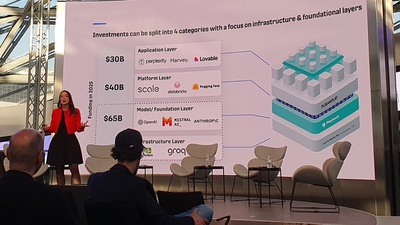
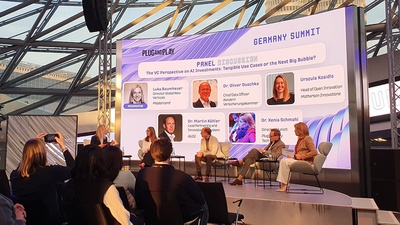
Panel 2 – “The Venture capital (VC) Perspective on AI Investments: Tangible Use Cases or the Next Big Bubble?” viewed the total AI topic from an investment standpoint as it can be observed that the AI landscape is rapidly shifting toward vertical AI solutions calling for specialized systems designed for specific industries. While many AI tools are already available, quality varies widely, as does the level of funding behind them. For investors, two factors remain decisive: (1) Clear customer value and (2) demonstrated adoption. Even though European funding programs support AI development, trust and adoption remain the critical drivers of long-term success. The investment environment also reflects the complexity of the AI stack. Different layers – from infrastructure to applications – require different investment strategies and timelines. One particularly promising opportunity lies where AI intersects with the physical world. Startups and SMEs that bridge software intelligence with robotics, machines, and industrial systems could see significant growth in the coming years.
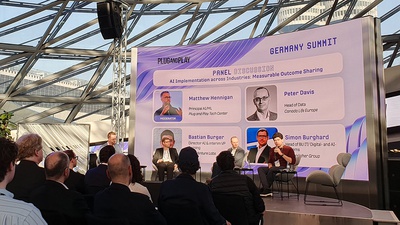 The final panel inspired by the perspectives of Panel 2 emphasized that innovation through partnerships is no longer optional. Given the speed of AI development and the complexity of modern technology stacks, companies cannot realistically build every capability in-house. Collaborations between corporations, startups, research institutions, and technology providers are becoming essential. AI partnerships are already showing strong potential in assisted decision-making, in engineering & design processes, in reducing development cycles, and decreasing the need for physical testing through simulation. Organizations were encouraged to integrate external AI expertise into their daily operations rather than treating AI initiatives as isolated projects. However, several governance challenges must be addressed such as data ownership, AI governance frameworks, compliance & regulation, and integration with existing systems and workflows. Companies must remain open-minded and willing to experiment, but they should also carefully evaluate business cases and partnerships before committing resources. Failure, speakers noted, should not be feared nor should companies feel pressured to move at the same speed as competitors if their business case requires a different pace. The key is to build strong ecosystems and identify partners who complement internal capabilities rather than attempting to develop every technology internally.
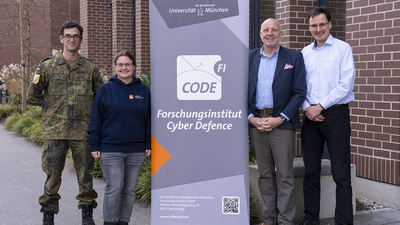
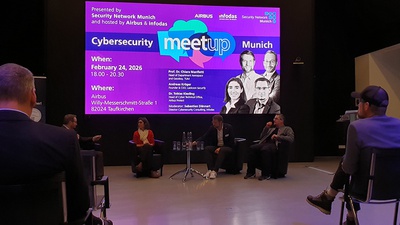
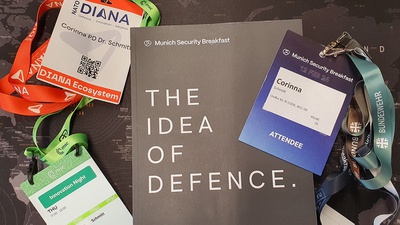
Besides interesting insights different Start-ups linked to Plug and Play had the opportunity to present themselves on stage as well as in a „Meet and Greet“-Area. This gave everyone the opportunity to dive deeper in the topics and the specific solution. Prof. Dr. Corinna Schmitt used this setting to promote the CODE Annual Conference 2026 with the linked Innovation Convention Cyber/IT as well as the opportunities to collaborate with the Research Institute CODE and getting in touch with the National Cybersecurity Coordination Center Germany (NCC-DE) for funding opportunities.
Summarizing the discussions at Plug and Play’s Germany Summit 2026 physical AI could become Europe’s strategic advantage, industrial AI will transform manufacturing through prediction and automation, and conversational AI will reshape human-machine interaction, but must be used responsibly. As AI continues to evolve, success will depend not just on technological breakthroughs but on trust, collaboration, and responsible deployment – ensuring that AI ultimately enhances the life of humans rather than replacing them.
Additional information and links:
Event: https://www.plugandplaytechcenter.com/events/germany-summit-2026
CODE Annual Conference 2026 (in German): https://www.unibw.de/code-events
Innovation Convention Cyber/IT (in German): https://www.unibw.de/code-events/innovationstagung-2026
SeCoSys research group: https://unibw.de/secosys
NCC-DE: https://www.nkcs.bund.de/
Text and pictures: RI CODE / Corinna Schmitt